Gunner FPS Shooter
FIRE GAMERole Playing
4.574.00 Reviews
- Version
- 2.8.4
- Installs
- 10.00M
- Age Rating
- Mature 17+
Screenshots
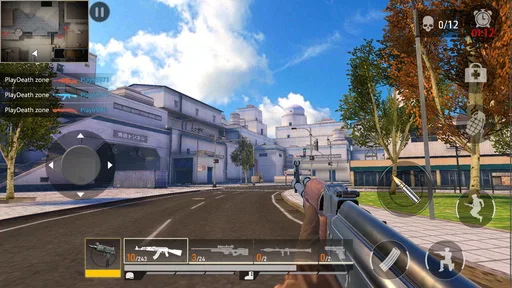
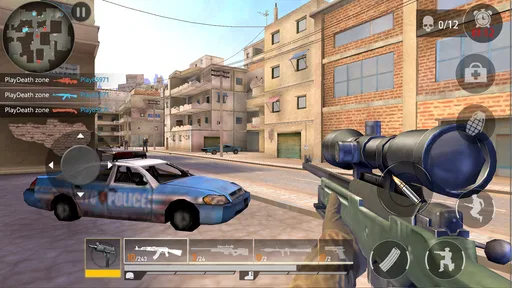
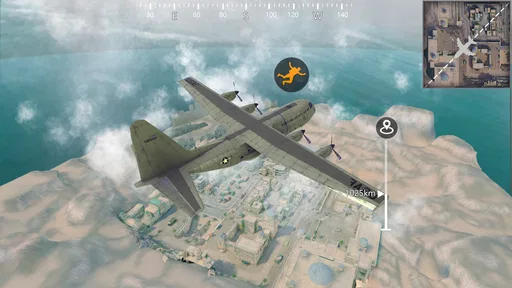
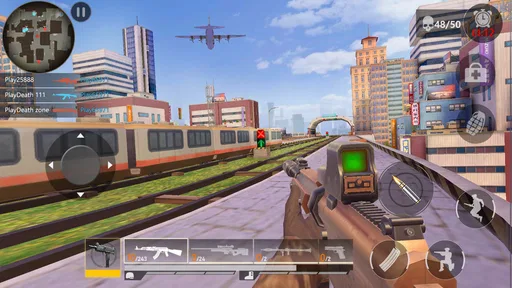
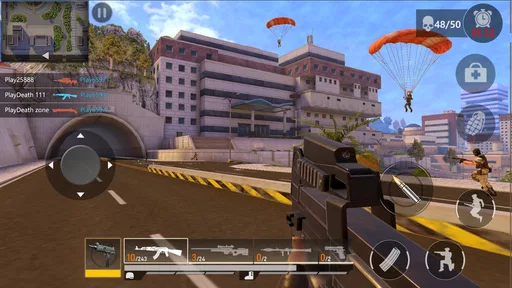
Our Review of Gunner FPS Shooter
 Analysis by Appyee
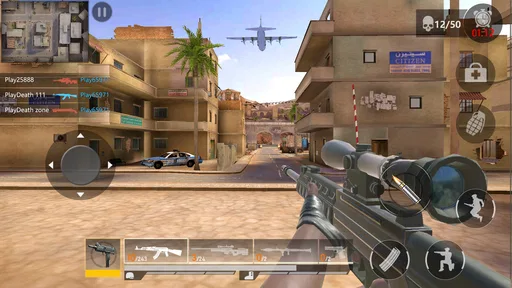
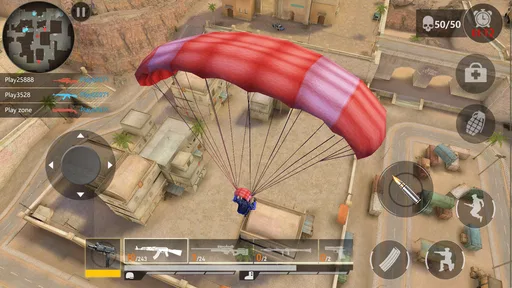
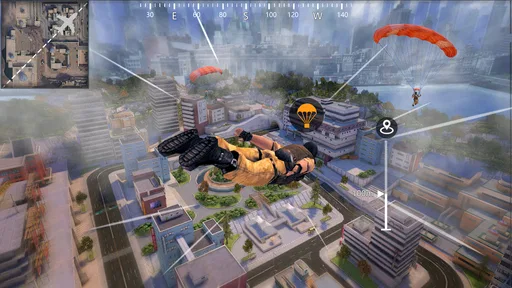
Gunner FPS Shooter is a free role-playing game from FIRE GAME that puts one idea at the center of the experience: take control of a gunner, clear hostile targets, finish the mission, and collect the reward. I found that this focus makes the game easy to understand within minutes, but it also creates a very particular kind of shooter. It is less about building a huge world or managing a complicated character and more about staying alert, aiming well, and making each mission count.
The game has been available since July 13, 2017, and its current version is 2.8.4. It runs on Android 7.0 or later, is rated Mature 17+, and has passed the ten-million-install mark. Those numbers suggest that it has reached a broad audience, while the 4.5 average from roughly twenty thousand ratings indicates that many players enjoy its straightforward approach. I would still look beyond the rating before deciding, because the same simplicity that makes it approachable may feel limited if you expect a deep role-playing system.
The gunner-focused capability that defines the game
The strongest part of Gunner FPS Shooter is its direct mission loop. Instead of asking me to learn a long list of systems before I can have fun, it gives the shooting objective immediate importance. The basic rhythm is clear: identify the enemy, fire, survive the encounter, complete the task, and use the reward to continue. That clarity is valuable on a phone, where I may only want a focused action session rather than a large commitment.
What makes this more than a generic shooting premise is the way the gunner role shapes my attention. I am not simply moving through a broad role-playing adventure and occasionally using a weapon. The weapon is the reason for the mission. Every encounter asks me to treat positioning, timing, and target selection as the main problems to solve. Even when the objective sounds simple, the pressure comes from deciding which threat deserves attention first and when it is safer to wait rather than fire immediately.
I also like that the reward is tied to completion rather than being presented as a separate activity. The mission gives the session a beginning and an end, while the reward gives me a reason to return. This structure works particularly well for players who enjoy visible progress but do not want to spend a long time reading menus or following a complicated story before reaching the next action sequence.
There is an important distinction here between a focused shooter and a full role-playing game. The role-playing label may attract people who expect extensive character development, rich conversations, branching decisions, or a large exploration map. I would not approach this title with those expectations. Its role-playing identity is best understood through the mission-and-reward progression around the gunner, not through the kind of elaborate world simulation found in larger genre alternatives.
The key strength is concentration: the game keeps the weapon, the enemy, and the mission objective in the foreground. That makes it a sensible choice for someone who wants action without a large amount of preparation. It is less convincing for anyone who plays role-playing games mainly for narrative discovery, party management, or long-term character customization.
What this focus changes during a session
In practice, a focused gunner game changes how I use my attention. I do not need to keep a large number of unrelated systems in mind at once. I can concentrate on reading the situation in front of me, deciding whether to shoot, and judging whether the current mission is worth pushing through carefully or quickly. That reduced mental load is one reason the game can feel comfortable on a mobile device.
It also makes mistakes easier to understand. If a mission goes badly, I can usually examine my own play rather than blaming a confusing chain of menus. Did I rush the target? Did I fail to notice a threat? Did I spend too much time aiming at one enemy while another became dangerous? This kind of immediate feedback is useful for players who prefer improving through repetition instead of studying a manual.
The trade-off is that the same clarity can reduce variety. When the main activity is consistently shooting enemies to complete missions, the game may not provide enough contrast for people who need frequent changes of pace. I enjoyed the directness, but I would not describe it as an all-purpose role-playing experience. It is at its best when I specifically want a gunner-centered session.
How the mission loop works in everyday play
The sensible way to approach each mission is to treat the objective as a small plan rather than a command to fire at everything immediately. I found it more useful to scan the situation first, identify the most urgent threat, and then act. That habit matters because fast shooting alone is not the same as effective shooting. A player who takes a moment to understand the encounter can often make better use of the same weapon than someone who simply reacts to the first target on screen.
One practical tip is to separate “visible” from “dangerous.” The enemy that catches my eye is not always the one that should receive the first shot. If several targets appear, I try to consider which one can interrupt the mission or create the most pressure. This is a small change in thinking, but it turns the game from a simple reflex test into a more deliberate series of choices.
Another useful habit is to avoid treating every mission as a race. The reward may encourage quick completion, yet rushing can make the shooting less controlled. I prefer a steady rhythm: observe, aim, fire, reassess. This is especially helpful when I am playing on a smaller phone screen, where hurried movements can make it harder to distinguish one threat from another.
The game’s free entry also affects how I would manage progress. It costs nothing to download and play, but optional purchases range from $0.99 to $19.99 per item. I would decide in advance whether I am comfortable spending anything. The best way to keep the experience satisfying is to treat purchases as optional conveniences rather than as a requirement for enjoying the basic mission loop. If I feel that progress is only enjoyable after paying, that is a sign to step back and reassess rather than buying automatically.
Because the content rating is Mature 17+, I would not recommend handing the game to a younger player simply because it is free or easy to start. The rating is part of the decision, especially for families sharing a device. Adults who enjoy action games should still consider whether the gun-focused presentation matches their preferences before installing it.
A practical routine for better missions
My preferred routine is simple. I begin by reading the objective instead of tapping through it without attention. During the encounter, I keep my aim controlled and avoid wasting focus on targets that are not immediately relevant. After the mission, I consider what caused any failure before starting again. This turns repetition into practice rather than frustration.
I also recommend playing in short, deliberate sessions at first. That gives me enough time to learn how the game feels without assuming that every problem is a difficulty issue. Sometimes the real problem is screen comfort, hurried aiming, or an unwillingness to slow down. Once the controls feel natural, longer sessions become more enjoyable, but the game’s focused structure already suits brief play well.
A less obvious benefit of this approach is that it helps me judge whether the game is a good personal fit before spending money. If the core act of completing missions and shooting targets is already enjoyable without purchases, the optional store is easier to ignore. If the basic loop feels repetitive from the beginning, buying an item is unlikely to solve the underlying mismatch.
The best scenario: a short, focused action break
The clearest use case is a short break when I want something more active than a puzzle but less demanding than a large role-playing adventure. Imagine having a few minutes between errands or after finishing work. I can open the game, concentrate on a mission, and leave after reaching a natural stopping point. The objective-based structure gives that session shape, which is more convenient than entering a sprawling game where I need to remember a long quest chain.
This also makes it suitable for players who like measurable goals. Completing a mission provides a clear sense of closure, while the reward gives the next session a reason to exist. I do not need to invent my own objective or wander around hoping to find something interesting. The game tells me what the immediate task is, and I decide how carefully to pursue it.
It can work well for someone new to mobile shooters too. The central idea is easy to explain, and the role-playing elements do not appear to stand between the player and the main action. A friend who has never spent much time with this type of game could understand the appeal quickly: aim at enemies, finish the assignment, and see what comes next.
However, I would not choose it for a relaxing session if gun-based combat is not appealing to me. The game’s identity is too closely tied to shooting for that. I would also choose a different option if my priority were a story-driven campaign, exploration, cooperative play, or a complex build system. A conventional role-playing game may offer more depth in those areas, while a highly competitive shooter may provide stronger player-versus-player pressure. Gunner FPS Shooter occupies a narrower but clearer space.
Another realistic scenario is using it as a warm-up before playing a more demanding action game. The mission loop encourages me to focus on aiming and target awareness without requiring a long setup. It can help me switch into an alert mindset, although players looking for precise competitive balance may prefer a dedicated competitive shooter instead.
Why the mission structure suits mobile habits
Mobile gaming often competes with interruptions, and a mission-based format is easier to fit around them than an open-ended adventure. I can decide that one objective is enough for the moment. That does not guarantee that every session will be short, but it gives me a natural point at which to stop.
The structure also reduces the frustration of returning after a break. In a story-heavy game, I may forget characters, locations, or the reason for a quest. Here, the immediate purpose is easier to recover: I am the gunner, there is an enemy, and the mission needs to be completed. That simplicity is not a replacement for narrative depth, but it is a real convenience for casual use.
Trade-offs before installing
The first limitation is repetition. A game built around a single strong capability must work hard to keep that capability interesting. If I enjoy aiming, target prioritization, and mission completion, the focus can feel satisfying. If I need frequent changes in mechanics, the same focus may begin to feel narrow. I would pay attention to my reaction after several sessions: am I improving and enjoying the process, or merely repeating it for the next reward?
The second limitation is the gap between the role-playing label and the likely expectations attached to it. Someone searching for a deep fantasy-style progression system may be disappointed by a game whose identity is primarily that of a gunner shooter. I would recommend it as a shooter with role-playing framing, not as a substitute for a large, story-rich role-playing title.
The third issue is the presence of in-app purchases. The free price is attractive, and it lowers the barrier to trying the game, but purchases can change how I think about progression. I prefer to play for a while before deciding whether anything in the store genuinely improves my experience. Setting a personal spending limit is sensible, particularly because individual items can cost as much as $19.99.
Device compatibility is another practical point. The game supports Android 7.0 and newer, so owners of older Android devices should check their operating system before expecting to install it. For supported devices, I would still consider screen size and touch comfort. A shooter can be technically compatible yet less enjoyable if the display makes aiming feel cramped.
The Mature 17+ rating also narrows its audience. Adults who are comfortable with its action-focused presentation may find the rating appropriate, but it should not be treated as a family-friendly default. Parents should make the decision themselves rather than relying only on the simple controls or free download.
There is also a personal trade-off between accessibility and depth. The direct mission loop is a strength when I want to start playing immediately. It becomes a weakness when I want more layers between missions. A more elaborate alternative may require more time to learn, but it may reward that investment with greater strategic variety. Gunner FPS Shooter is better when convenience and immediate action matter more than complexity.
How it compares with familiar alternatives
Compared with a traditional role-playing game, this title asks for less patience before the action begins, but it may offer less narrative and character variety. Compared with a competitive shooter, it feels more centered on completing missions than proving myself against other human players. Compared with a casual arcade game, it gives the shooting a stronger sense of progression through objectives and rewards.
That middle position is useful. I can recommend it to a player who wants more purpose than endless target practice but does not want the commitment of a long campaign. I would not recommend it to someone whose main reason for playing is social competition or a carefully written story. Choosing the right comparison prevents disappointment: this is a focused mobile gunner experience, not a universal replacement for every shooter or role-playing game.
Who gets the most from the gunner role
The best audience is an adult player who enjoys direct missions, likes improving through repeated attempts, and wants a free game that can be understood quickly. The large install base and strong average rating show that the format has broad appeal, but I would still place personal taste above popularity. If the thought of clearing a mission with careful aim sounds enjoyable, the game is worth trying.
It is also a good fit for people who prefer goals over wandering. The objective provides direction, and the reward gives a reason to complete the task rather than abandoning it halfway. Players who enjoy short bursts of action may appreciate being able to enter the game with a clear purpose instead of managing a long list of unrelated activities.
I would be more cautious about recommending it to players who dislike in-app purchases on principle. The game is free, but the available items mean that spending can become part of the experience if I let it. It is also not the right choice for younger users because of the Mature 17+ rating, or for players who want a nonviolent, story-led, or heavily social game.
FIRE GAME has made a clear design choice: keep the gunner at the center and let missions organize the rest. In my experience, that choice works when I want immediate action with a simple reason to continue. It does not erase the limitations of a narrow combat loop, but it makes the game easy to evaluate honestly. I know what I am installing, and I can quickly tell whether that style suits me.
My final recommendation is to try it as a focused shooter rather than expecting a complete role-playing world. Start without spending, use the early missions to judge whether the aiming and objective loop hold your attention, and only consider purchases if the core experience already feels worthwhile. For an adult looking for a free, mission-driven gunner game on a compatible Android device, it is a reasonable choice. For someone seeking deep storytelling, extensive exploration, or competitive multiplayer, I would look elsewhere.
Verdict
Strengths of Gunner FPS Shooter
- Responsive controls make aiming and movement feel smooth.
- Short matches are convenient for quick gaming sessions.
- Weapon variety lets players experiment with different combat styles.
- Fast-paced battles keep the gameplay consistently engaging.
- Offline play may be useful when an internet connection is unavailable.
Limitations of Gunner FPS Shooter
- Repetitive environments can make matches feel similar over time.
- Enemy behavior may seem predictable in longer sessions.
- Progression can feel slow without frequent play.
- The small-screen interface may feel crowded during intense firefights.
- Older devices may experience reduced performance or frame-rate drops.
Other Releases by FIRE GAME
View All
Special Strike Shooter
Adventure4.6

Zombie Strike: Shoot Fire
Adventure4.6
Similar Picks in This Category
View All
Hair Dye
CrazyLabs LTD4.4

Monster High™ Beauty Salon
CrazyLabs LTD4.5

Bus Simulator - Bus Games 3D
Jima Apps4.4

Flight Pilot: 3D Simulator
Wildlife Studios4.1


Super Stylist Fashion Makeover
CrazyLabs LTD4.4
Frequently Asked Questions
What is Gunner FPS Shooter, and what kind of gameplay does it offer?
Gunner FPS Shooter is a first-person shooting game focused on fast-paced combat, aiming, and weapon handling. Players typically move through action-oriented environments, face enemy targets, and complete shooting challenges using different firearms. The experience is designed for users who enjoy straightforward FPS mechanics, quick reactions, and short gameplay sessions rather than a complex story-driven campaign.
Is Gunner FPS Shooter suitable for beginners who are new to FPS games?
Yes, Gunner FPS Shooter can be approachable for beginners because its main controls are based on familiar FPS actions such as moving, aiming, shooting, and changing weapons. New players may need a little time to adjust to touchscreen controls and enemy movement, but the basic gameplay is easy to understand. Players with previous shooting-game experience will likely progress more quickly.
Does Gunner FPS Shooter require an internet connection to play?
The connection requirements may depend on the version and features available on your device. Core shooting missions may be playable offline if the installed release supports offline gameplay, while advertisements, updates, online functions, or account-related features can require internet access. It is best to check the store listing and test the game after installation before relying on it during travel or without mobile data.
Are there in-app purchases or advertisements in Gunner FPS Shooter?
Gunner FPS Shooter may include advertisements or optional in-app purchases, as is common with free mobile shooting games. Ads can appear between missions, after completing activities, or when claiming certain rewards, while purchases may offer currency, weapons, upgrades, or other conveniences. Before downloading, users should review the current Google Play or App Store listing for the exact monetization details.
What devices are compatible with Gunner FPS Shooter, and how much storage does it need?
Compatibility depends on the operating system, device model, and version of the game available in your region. Modern Android and iOS phones should generally provide a smoother experience, while older devices may experience slower performance, longer loading times, or reduced graphics quality. Check the official store page for the required OS version, download size, and available storage before installing.
Play our best games!


